

Oct 23, 2026
China’s AI Talent War in the Age of Digitalization
.png)
Ying Zhang


Automotive Transformation: Three Key Trends Shaping OEMs and Suppliers
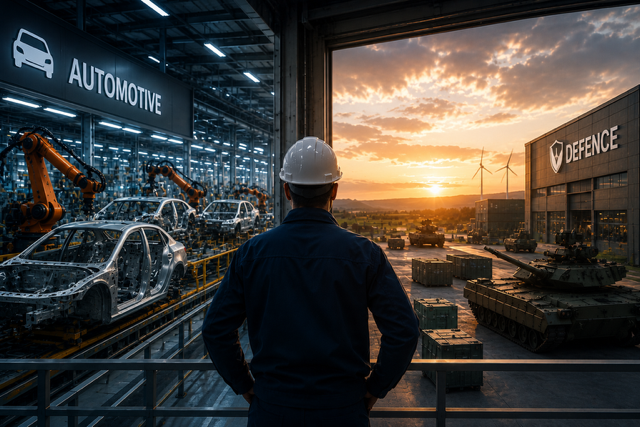
The global automotive industry is undergoing one of the most profound transformations in its history. Rapid technological innovation, evolving regulatory frameworks, and shifting consumer expectations are forcing both vehicle manufacturers and suppliers to rethink their strategies, operations, and leadership structures. Traditional business models that defined the industry for decades are being challenged by new entrants, digital ecosystems, and the urgent need for sustainable mobility solutions. For original equipment manufacturers (OEMs) and automotive suppliers alike, adapting to these changes is no longer optional — it is essential for long-term competitiveness.
Three major trends are currently shaping the automotive sector: electrification, the software-defined vehicle, and the restructuring of global supply chains. Together, these developments are redefining how vehicles are designed, manufactured, and delivered to the market.
The first and most visible transformation is the global shift toward electrification. Governments around the world are introducing stricter emissions regulations and setting ambitious targets for the reduction of carbon emissions. As a result, OEMs are rapidly expanding their electric vehicle portfolios and investing heavily in battery technology, charging infrastructure, and new production capabilities. What was once considered a niche segment is quickly becoming the industry standard.
This transition has far-reaching implications not only for vehicle manufacturers but also for the entire supplier ecosystem. Traditional suppliers specializing in internal combustion engine components are facing significant disruption, while companies focusing on battery systems, power electronics, and electric drivetrain technologies are experiencing strong growth. At the same time, the race for technological leadership in battery efficiency, range optimization, and cost reduction is intensifying across global markets.
A second defining trend is the emergence of the software-defined vehicle. Modern vehicles are increasingly becoming complex digital platforms rather than purely mechanical products. Software now plays a central role in determining vehicle functionality, user experience, safety systems, and connectivity services. Over-the-air updates, advanced driver assistance systems, and integrated digital ecosystems are reshaping how vehicles interact with both drivers and the broader mobility environment.
For OEMs and suppliers, this shift requires a fundamental transformation in capabilities and organizational structures. Automotive companies are now competing not only with traditional industry players but also with technology companies that bring strong expertise in software development, artificial intelligence, and data analytics. As a result, many automotive organizations are investing heavily in digital talent, software engineering, and partnerships with technology firms to accelerate innovation and remain competitive in a rapidly evolving landscape.
The third major trend influencing the automotive sector is the restructuring of global supply chains. The disruptions of recent years — from semiconductor shortages to geopolitical tensions and logistical constraints — have exposed vulnerabilities in the traditionally highly optimized global supply networks of the automotive industry. Companies are now reassessing their sourcing strategies and seeking to build more resilient and flexible supply chains.
Many OEMs are moving toward greater vertical integration in critical technologies such as battery production and semiconductor partnerships. At the same time, suppliers are diversifying their production locations and strengthening regional manufacturing capabilities to reduce dependency on single markets. The ability to manage complex supply networks while maintaining efficiency has become a critical competitive factor.
At Latzer Associates Group, we work closely with automotive OEMs and suppliers to identify leaders capable of navigating this transformation. In a rapidly evolving industry, securing visionary leadership is becoming one of the most critical factors for sustained success.
.jpg)
.png)